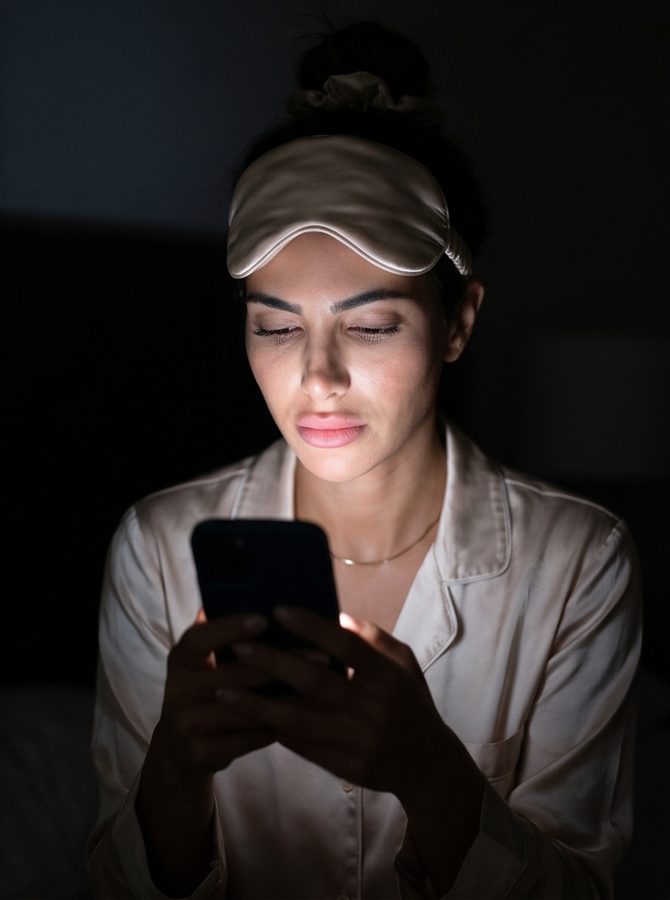
Wide awake at midnight? Your body clock may be running on a different time.
Most people blame themselves. Scientists call it your chronotype. We've made it simple with four Sleep Colours. Find yours and know what to do tonight.
M
By My Sleep Fix Journal 8-minute read
12:40am. Still awake, again.
It's 12:40am. The house is quiet. The AC hums. You put the phone down twenty minutes ago and promised yourself that this time you'd sleep.
You flip the pillow and check the time. 1:15am. If I fall asleep now, I get six hours. Five and a half. Five.
Your mind won't switch off. Tomorrow's meeting. A message you forgot to answer. Something you said three years ago.
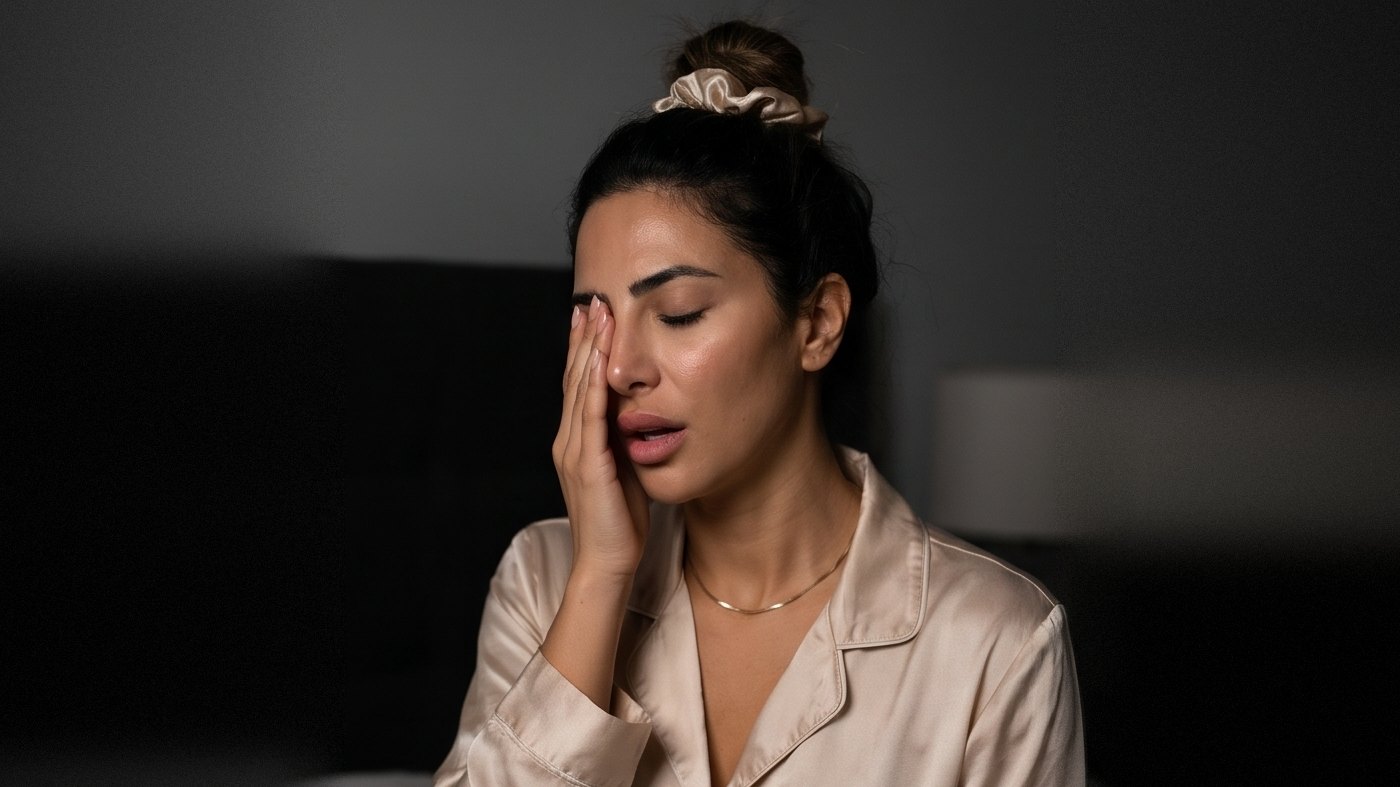
Then the 7:00am alarm, and it feels like you closed your eyes five minutes ago. The morning runs on coffee and the day goes by in a fog. By 3:00pm you could sleep at your desk.
You promise yourself an early night. Then 11:00pm comes, and you feel more awake than you have all day. Same thing tomorrow.
“Being tired isn’t the same as being ready to sleep.”
You've probably blamed yourself
You've blamed the phone. The coffee. Stress at work. Maybe you've decided you're just "a bad sleeper", the same way your height was decided for you.
You've tried the tips too. Chamomile. No screens after 9:00pm. Rain sounds. A new pillow. Blackout curtains. Some of it helped a little. None of it lasted.
Maybe you forced yourself into bed at 10:00pm and stared at the ceiling for two hours. Maybe you got up earlier, and felt worse.
Most sleep tips were written for one kind of body clock. If yours runs late, an early bedtime is like being told to fall asleep at 7:00pm. You can lie down, but your brain isn't ready. Nobody told you that.
So you start to think the problem is you. It isn't.
Your body clock sets your bedtime
Scientists call your personal setting on your body clock your chronotype. We've simplified the science into four Sleep Colours, and you'll meet them in a moment.
Deep in your brain, about 20,000 nerve cells keep time for your whole body. They decide when you feel sharp, when your temperature drops, and when sleep becomes possible.
It isn't a bad habit. In 2019, a study of nearly 700,000 people found 351 places in our DNA linked to chronotype. Your timing is partly written in your genes.
When researchers mapped the natural sleep times of tens of thousands of people, the earliest and latest sleepers were several hours apart. Same city. Same 24 hours. Very different clocks.
Why you feel most awake right when you try to sleep
You'd expect to get sleepier as the evening goes on. Your body does something else.
In the two to three hours before your natural sleep time, your clock sends its strongest wake-up signal of the whole day. Sleep researcher Peretz Lavie found it in 1986. Scientists call it the "forbidden zone". We call it your wide-awake window.
A night person's evening
How alert a night person feels through the evening. Illustrative.
If your natural sleep time is 1:00am and you lie down at 10:30pm, you're trying to sleep in the most alert part of your day.
And lying awake night after night teaches your brain that bed is a place for being awake. So it gets harder, not easier.
The science, made simple: four Sleep Colours
In the research, chronotype is a sliding scale full of scores and graphs. We've simplified it into four Sleep Colours, each a plain name for where your clock sits. Which one sounds like you?
Sunrise
The early clock. Up before the alarm, fading by 9:00pm, wonders how anyone enjoys a 10:00pm dinner.
Daylight
In step with the sun. Strong mornings, a real dip around 3:00pm, asleep by 11:00pm without trying.
Twilight
The late clock. Foggy until 11:00am, sharpest after dark, best ideas at midnight.
Moonlight
The light sleeper. The AC clicking or a car outside is enough to wake them. Tired but wired.
What a 10:30pm lights-out does to each colour
Typical 8-hour sleep window on a free day. Illustrative; your own window comes from your assessment.
What it costs you
It's more than a tired morning. When your body clock and your daily life are out of step, researchers call it social jet lag. You live in one time zone and your body lives in another.
Meetings at 9:00am. Dinners at 10:00pm. School runs at 7:00am. Plans at midnight on the weekend. Your body clock switches time zones twice a week without ever getting on a plane.
You know the result. Foggy mornings, a crash in the afternoon, a second wind at night, and weekends spent catching up. Till Roenneberg's team found most people carry at least an hour of social jet lag, and around a third carry two hours or more.
It adds up. People with more social jet lag tend to drink more coffee and alcohol and smoke more. In one study of about 65,000 people, it was linked with a higher chance of being overweight.
Day to day, it's harder to focus in the morning and you have less patience by the evening.
None of this means something is wrong with you. Your days and your clock are pulling in different directions.
Your clock can move
Your genes set the starting point. Your day moves it, through light, caffeine, screens and timing.
The catch is that the right timing depends on your colour. Bright morning light is exactly what a Twilight needs. A Sunrise needs almost the opposite. That's why general sleep tips fail.
Researchers at the University of Colorado took a group camping for a week with no electric light. Their body clocks moved about two hours earlier, and the night owls moved the most.
The same lab found that a double espresso's worth of caffeine three hours before bed pushed the body clock about 40 minutes later. A Harvard team found that reading on a bright screen before bed delayed the body's night signal by about an hour and a half, compared with a printed book.
How far apart are your clock and your day?
Four quick questions to see how big the gap is. This is a preview, not your full assessment.
We built The Method to do one thing: line up your days with the clock you actually have.
Take your detailed assessment.Right after you pay, on your phone. It compares when you sleep, wake and feel sharp on work days and free days, the way sleep researchers do.
Get your Sleep Colour and your Method.20 pages written for your colour, ready to download at the end.
Follow it for 28 days.When to get light, stop caffeine, put screens away and start winding down. Your bedtime moves a little each week, so you get to bed actually sleepy.
Nobody is asking you to become a morning person. A Twilight will never be a Sunrise. The plan finds a bedtime you can honestly fall asleep at, and builds your day around it.
Take the assessment right after you pay. Your Method arrives at the end.
Don't know where to start? First, find your Sleep Colour.
That's what the detailed assessment is for. It shows where your clock sits. Then your Method tells you what to do with light, caffeine, screens and bedtime, week by week, for your colour.
Questions people ask
Is "Sleep Colour" a scientific term?
No. Chronotype is the scientific term. Sleep Colour is our plain name for four bands of the chronotype spectrum, so you don't need a textbook to use it.
I'm not sure if I'm a morning or a night person.
That's what the assessment is for. Plenty of people are surprised by their result.
Can a plan really move my body clock?
Within limits. The studies above show light and caffeine timing moving the clock by 40 minutes to 2 hours. The plan uses those levers, a little at a time.
I travel a lot. Will it still work?
Yes. Your Method has a page on flights and time zones, written for your colour.
How do I get it?
Straight after you pay, take the assessment on your phone. Your Method is ready to download at the end, with a copy by email.
Is this for sleep disorders?
No. If you've had trouble sleeping three or more nights a week for three months, if you snore loudly or someone has noticed pauses in your breathing, or if you're sleepy all day no matter what, please see a doctor. This plan is lifestyle guidance, not medical care.
Before the lights go out
Every night the house goes quiet again. You can spend another night tossing and turning.
Or you can find out, before bed, what your clock has been trying to tell you.
This is an advertisement. It was written by My Sleep Fix to promote a My Sleep Fix product and is not an independent news article. The researchers and journals mentioned have no connection with My Sleep Fix and have not reviewed or endorsed this product.
Sleep Colour is an educational framework based on published chronotype research. It is not a medical test and does not diagnose any condition. My Sleep Fix is a lifestyle brand. Mysleepfix LLC is licensed in the UAE for health and lifestyle coaching and consultancy, not as a medical practice. Individual results vary.